Gym, Clinic and Wellness Center Vending: What Works and What It Costs
 November 24, 2026
8 min read
Gyms, clinics and recovery centers share a problem that most offices don’t. People arrive at all hours, they’re often thirsty or hungry, and the nearest option is usually a gas station across the street.
Meeting that need on site improves the visit and keeps people on the property longer. It also doesn’t have to cost the facility much, or anything at all.
This guide covers the main ways to add food and drink at a wellness facility, who each option suits, and what to ask before you sign.
Why Wellness Facilities Are a Good Fit for On-Site Food and Drink
Think about who walks through the door. Gym members want water, protein and a quick snack before or after a workout. Patients and visitors at a clinic may wait longer than expected and want something simple. Staff on long shifts want coffee or a snack without leaving the building.
These aren’t one-time needs. They repeat every day, which is why on-site options tend to get steady use. A few patterns show up across facility types:
- Peak hours are predictable. Early morning and early evening at gyms, mid-morning and early afternoon at clinics.
- Convenience beats price. People will pay a little more not to leave and come back.
- Choice matters. A machine that only sells candy gets ignored by people who came to feel better.
Option 1: Traditional Vending Machines
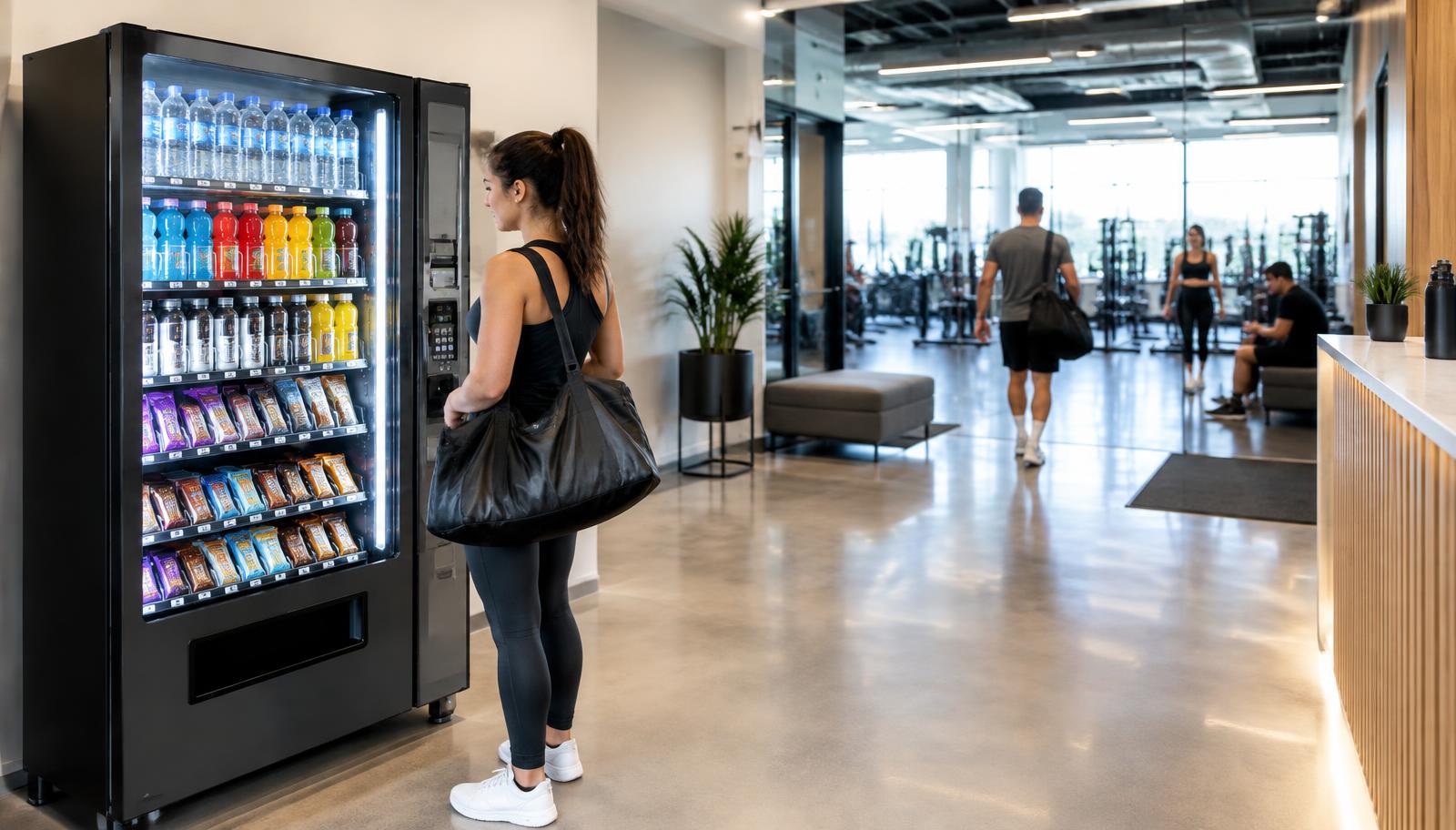
A snack and drink machine in the lobby or near the locker rooms is the simplest place to start. It runs without staff, takes cards and mobile payment, and is available whenever the building is open.
The best part is the cost. Through vending machines for free arrangements, the operator provides the machine, installs it and keeps it stocked, and earns its money from product sales. The facility typically pays for electricity.
Operators set minimums, so ask what size of site qualifies. Vending Group says offices typically need at least 40 employees or enough foot traffic, and hotels, senior living and recovery facilities typically need 40 or more rooms.
Product mix is the difference between a machine that gets used and one that doesn’t. Ask your operator for:
- Water, sports drinks and zero-sugar options
- Protein bars, nuts and fruit-based snacks
- A few familiar favorites so no one has to settle
Option 2: Smart Stores and Micro Markets
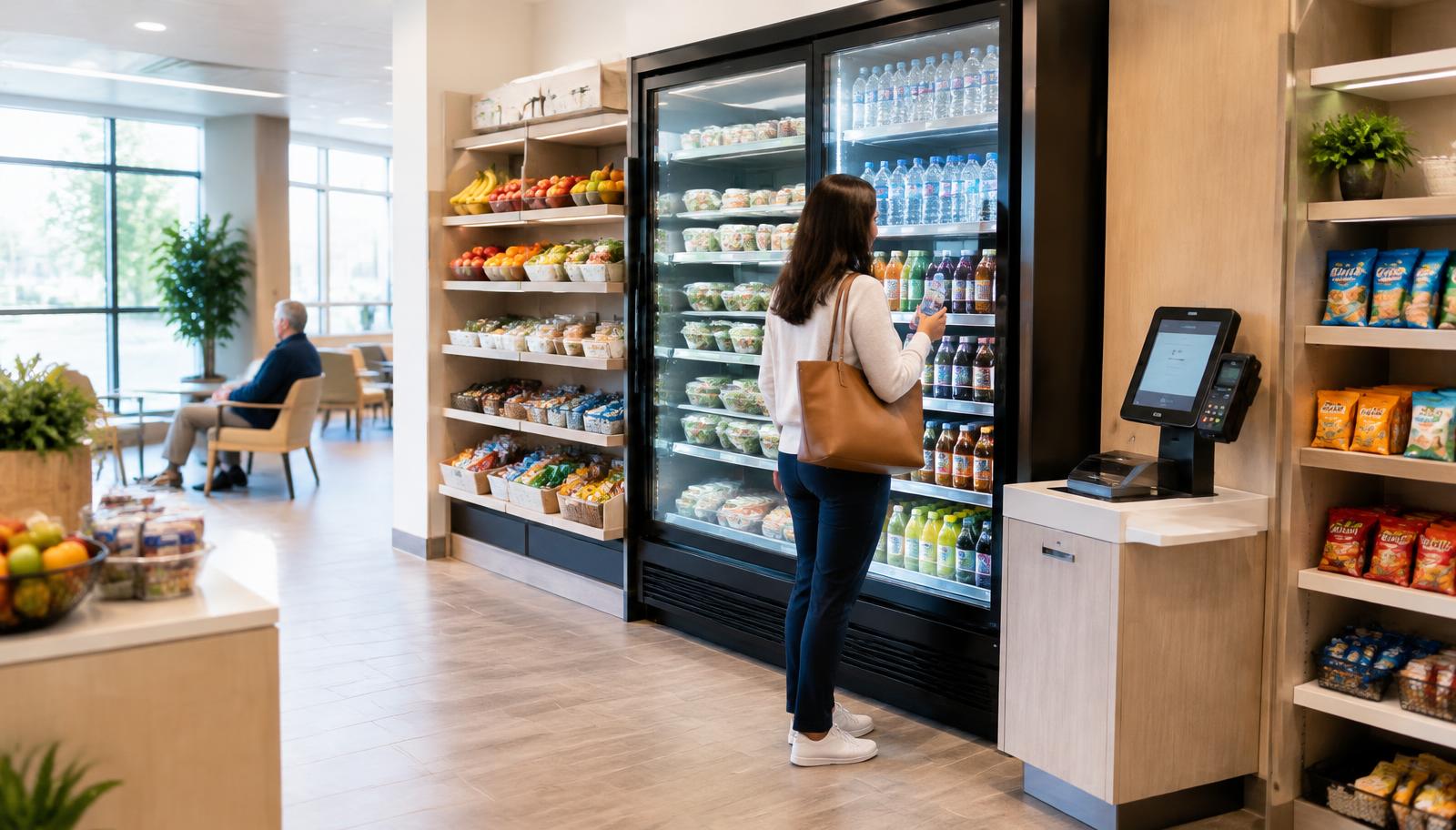
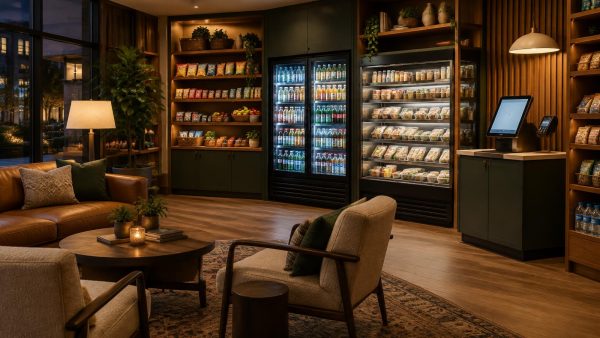
If your lobby has a spare corner, a self-serve store can offer much more than a machine. A smart store or micro market lets people pick fresh food, drinks and everyday items from open shelves and coolers, then pay at a self-checkout.
Providers such as Canteen and Vending Group serve gyms, hospitals and senior living. Smart stores are compact units for smaller sites, and micro markets suit larger ones.
You can run one yourself and keep the profit, or a third-party operator can run it for you. If the facility wants to avoid restocking, ask about the second model.
Option 3: Branded Beverages
Most people know what they want to drink. If your members or patients ask for particular brands, ask whether the operator can supply a coca cola drink vending machine, pepsi soda vending machines or both, alongside water and lower-sugar options.
Familiar brands raise usage, and a mix keeps people from walking out to buy something else.
Option 4: Owning Your Own Machines
Some facilities prefer to own their machines to control the product list, the pricing and all the revenue. That’s a legitimate choice, but it means the facility handles stocking, repairs, payment hardware and expired product.
In a wellness setting, where freshness and cleanliness matter, that’s a real commitment. Check the full cost before you commit: the machine, card readers, restocking, service calls and staff time.
What to Ask Any Vending Provider
The same questions apply whether you choose a machine or a store:
- What are the minimums? Employees, members, patients or rooms, depending on the site.
- Who owns the equipment, and who pays for installation and repairs?
- How long is the agreement, and how do you cancel?
- What can they stock? Ask for healthier options in writing, not just verbally.
- How fast do they respond when a machine is empty or broken?
- How are sales reported, and is revenue sharing available?
- What happens to expired product?
Getting the same answers from every provider makes the comparison fair, and it quickly shows who treats you as a partner.
Placement and Layout Tips
Where a machine sits affects how often it’s used. A few practical rules:
- Put it where people already wait or pass, such as the lobby, near the front desk or by the locker rooms.
- Keep it visible but out of the way of entrances and exits.
- Check power and access. A standard outlet is usually enough, but confirm clearances and delivery access.
- Keep the area clean. A tidy machine suggests a well-run facility.
- Consider hours. If part of the building is open 24 hours, a self-service option covers the gaps when staff aren’t there.
Free and Paid Services Can Work Together
Free placement doesn’t have to be all or nothing. Many facilities start with a no-cost machine in the lobby, then add paid services such as coffee or a self-serve store once they see how much the first machine gets used.
Ask whether free and paid services can sit under one agreement, so adding a service later doesn’t mean starting over with a new vendor.
Consider the Whole Picture
Food and drink is often just one of several services a facility buys. Water, coffee, snacks and drinks from separate vendors means separate invoices, contacts and service calls, and someone has to chase them all.
A vending service provider such as Vending Group puts these under a single point of contact and one agreement, even across multiple locations, so you aren’t spending hours each month managing vendors. That matters most for multi-site operators, such as gym chains or clinic groups, where each location would otherwise have its own arrangement.
How to Get Started
- Walk the space and note where people wait or gather.
- Count your traffic: members, patients, visitors and staff.
- Pick the model: free placement, a store, or your own machines.
- Ask for a proposal with the product list, service schedule and terms.
- Start small and review. After a few weeks, look at what sells and adjust the mix.
FAQ
Can a gym get a vending machine for free?
Often yes, if it meets the operator’s minimum. The operator provides and services the machine and earns its money from sales. The facility typically pays for electricity.
Are healthy vending options available?
Yes. Ask the operator about water, zero-sugar drinks, protein bars and nuts before you sign.
Is a micro market better than a vending machine?
It depends on space and traffic. A micro market offers more variety but needs more room, while a machine fits almost anywhere.
Can one provider cover several locations?
Some can. Ask about a single agreement and one point of contact across sites.
Want more operator-tested playbooks like this one? Visit The Biz Gang — the digital marketing agency services small business growth teams use to find better business services, faster.
Need Help With Your Strategy?
Biz Gang helps service businesses build sustainable organic growth through strategic content and SEO.
Get in Touch
The Biz Gang
Further Reading
Office Water Options Compared: Bottled, Bottleless or Filtered
Compare office water options: bottled, bottleless and filtered. See what each costs in upkeep, space and time, and what to ask any provider.
Office Snack Options Compared: Stocked Pantry, Subscription Boxes and Delivery Services
Compare office snack options: stocked pantries, subscription boxes, delivery services and vending. See what each costs in time and money.
What a Small Hotel Can Offer Guests After the Breakfast Buffet Closes
Small hotels can serve guests after breakfast ends with micro markets, vending and laundry. See what each option involves and what it takes to start.